TheDPDPAct.com -
Official WhatsApp Channel
Stay updated with the latest DPDP Act news, compliance insights, updates, and resources.
Join Our WhatsApp Channel →Why India's DPDP Act Is Redefining the Responsibility of Every Doctor?
The consultation was routine.
A patient booked an appointment online, uploaded previous laboratory reports through the clinic's portal, completed a digital registration form, consulted the physician, received an electronic prescription, paid through a UPI application, and later received follow-up instructions over WhatsApp.
The entire interaction took less than fifteen minutes.
Yet behind the scenes, something remarkable happened.
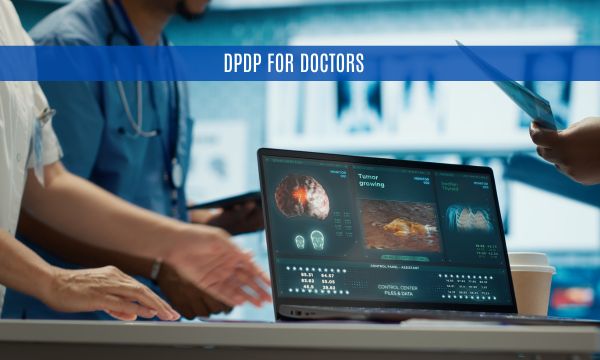
The patient's information travelled through multiple digital systems—appointment software, Electronic Medical Records (EMRs), billing platforms, laboratory networks, cloud servers, messaging applications, payment gateways, and perhaps even an AI-powered documentation assistant.
While the consultation ended before lunch, the patient's data may remain stored, shared, backed up, analysed, and processed for years.
This is the new reality of healthcare.
Doctors have always been trusted with people's most intimate information. What has changed is not the expectation of confidentiality—it is the complexity of maintaining it.
As India prepares for the implementation of the Digital Personal Data Protection (DPDP) Act, healthcare professionals are entering a new era where protecting patient information becomes as important as protecting patient health.
The conversation is no longer about technology.
It is about trust.
The Doctor's Role Has Quietly Expanded
Most physicians never set out to become custodians of digital information.
Their profession has always revolved around diagnosis, treatment, empathy, and clinical judgement.
Yet over the last decade, healthcare has undergone one of the largest digital transformations of any industry.
* Appointments moved online.
* Medical records became electronic.
* Diagnostic reports became downloadable.
* Prescriptions became digital.
* Telemedicine became mainstream.
Artificial Intelligence entered consultation rooms.
Industry reports estimate that healthcare now accounts for nearly 30 percent of the world's total data generation, making it one of the fastest-growing data ecosystems globally. Every consultation creates multiple digital records that continue to move long after the patient has left the clinic.
Ironically, while technology has simplified healthcare delivery, it has also multiplied the number of places where patient information exists.
Today, confidentiality extends far beyond locked filing cabinets.
It lives inside databases, mobile phones, cloud infrastructure, AI platforms, third-party vendors, diagnostic centres, insurance systems, and communication applications.
The responsibility of a doctor has quietly evolved—from protecting conversations to protecting information.
Privacy Is Becoming a Clinical Responsibility
Patient confidentiality has never been optional.
Medical ethics have demanded it for centuries.
The DPDP Act does not introduce a new moral obligation.
It modernises an old one.
Just as infection control became a standard part of healthcare after understanding how diseases spread, data protection is becoming a natural extension of professional care in a digital world.
Patients rarely ask how their MRI machine works.
They trust the doctor to use it safely.
Increasingly, they will place the same trust in how their personal information is handled.
That trust deserves the same level of professional attention.
Privacy is no longer simply a legal discussion reserved for compliance officers or IT departments.
It is becoming another dimension of patient safety.
The Biggest Privacy Threat Isn't Always a Hacker
When people imagine data breaches, they often picture sophisticated cybercriminals attacking hospital servers.
Reality tells a different story.
Studies of healthcare privacy incidents across jurisdictions governed by regulations such as GDPR and HIPAA consistently show that many breaches originate from ordinary workplace behaviour rather than advanced cyberattacks.
* A report emailed to the wrong recipient.
* A laptop left unattended.
* A receptionist accessing records beyond their responsibilities.
* A consultant storing patient photographs on a personal phone.
* An unlocked workstation between consultations.
* A WhatsApp message forwarded without verifying the recipient.
None of these actions are malicious.
Most are simply habits developed in busy clinical environments where convenience often takes priority over governance.
Technology rarely creates these risks.
Workflows do.
That distinction matters because operational discipline—not just cybersecurity—is becoming central to healthcare privacy.
Artificial Intelligence Has Introduced a New Layer of Trust
Perhaps the most significant shift in modern medicine is the rapid adoption of Artificial Intelligence.
Doctors are using AI to draft consultation summaries, transcribe voice notes, search medical literature, automate documentation, organise clinical information, and assist with decision-making.
The productivity benefits are undeniable.
But AI also asks healthcare professionals to consider questions they have rarely needed to ask before.
* Where does the patient's information go after it is entered?
* Is it temporarily processed or permanently stored?
* Could it be used to improve future AI models?
* Who owns that information once it leaves the clinic's systems?
* What contractual assurances exist between the healthcare provider and the AI vendor?
Artificial Intelligence has effectively become a silent participant in many consultations.
Like every member of the clinical team, it must be trusted before it is relied upon.
The DPDP Act Is Less About Compliance Than It Is About Accountability
Many organisations approach privacy legislation with one objective: avoid penalties.
Healthcare should aim higher.
The DPDP Act encourages organisations to understand the information they collect, justify why they collect it, protect it appropriately, and remain accountable throughout its lifecycle.
For doctors, this represents a shift in mindset.
Patient information should no longer be viewed merely as a by-product of treatment.
It is an asset entrusted to the healthcare provider with an expectation of responsible stewardship.
That responsibility extends beyond consultation rooms into every technology platform, vendor relationship, administrative process, and clinical workflow.
Compliance may begin with legislation.
Trust is built through behaviour.
Tomorrow's Most Trusted Clinics Will Think Differently
Healthcare organisations that excel in the coming years will not necessarily be those with the most advanced technology.
* They will be the ones that combine innovation with responsible governance.
* These organisations will understand exactly where patient information resides, who can access it, and why.
* Technology partners will be selected not only for features and pricing but also for their privacy commitments.
* Artificial Intelligence will be evaluated with the same diligence applied to any other clinical tool.
* Administrative staff will recognise that protecting patient information is just as important as maintaining accurate medical records.
* Patients will receive clear explanations about how their information is collected, used, retained, and protected.
Most importantly, privacy will become part of organisational culture rather than an annual compliance exercise.
That transformation does not require complex legal knowledge.
It requires leadership.
The Future of Healthcare Will Be Measured by Trust
Medical science will continue to evolve.
Artificial Intelligence will become more capable.
Remote consultations will become commonplace.
Connected devices will generate continuous streams of health information.
Digital therapeutics will reshape patient care.
Yet amidst all this technological progress, one constant will remain.
Patients will continue to choose doctors they trust.
Clinical expertise will always earn respect.
But in an increasingly digital healthcare ecosystem, the protection of personal information will become another measure of professional excellence.
The DPDP Act is not asking doctors to become lawyers or cybersecurity specialists.
It is asking healthcare professionals to recognise that in today's world, safeguarding patient data is inseparable from safeguarding patient dignity.
* Every diagnosis begins with trust.
* Every treatment depends on trust.
* Every digital interaction should preserve that trust.
Because long after the consultation has ended, the prescription has been filled, and the patient has returned home, one responsibility remains.
Ensuring that the confidence placed in a doctor is protected—not only in person, but across every system, every device, and every byte of information that modern healthcare now depends upon.