Privacy isn't just compliance anymore — it's a business differentiator. A DPO gives your organization the structured oversight modern data risk demands.
In a data-driven economy, personal data has become one of the highest-risk assets an organization holds. Between expanding global regulations, AI-driven data processing, and rising cyber threats, privacy oversight can no longer sit fragmented across legal, IT, and operations teams. A Data Protection Officer (DPO) closes that gap — providing centralized, independent ownership of privacy risk.
ILLUME's DPO Services give your organization exactly that: a dedicated, expert-led privacy function without the cost and delay of a full-time hire. The result is structured governance, audit-readiness, and a level of data protection visibility most organizations don't have until it's tested by a breach or a regulator.
Why a DPO Function Matters
Without structured privacy governance, organizations operate with real legal, operational, and reputational exposure — often without realizing it until something goes wrong.
* Growing Data Volume — Personal and sensitive data now flows through more systems, vendors, and AI tools than most organizations can track manually.
* Regulatory Scrutiny — Data protection laws are expanding globally, and enforcement is increasingly active, not theoretical.
* AI-Driven Risk — Automation and AI processing introduce new privacy exposure that traditional governance models weren't built to handle.
* Customer Trust Expectations — Transparency around data handling has become a genuine purchasing and retention factor, not just a legal checkbox.
* High Cost of Failure — Breaches carry significant financial and reputational consequences, often disproportionate to the size of the underlying gap.
Where DPO Services Are Required
DPO services aren't limited to specific industries — they're relevant wherever personal data processing is central to how a business operates.
Regulatory triggers typically require or strongly recommend a DPO when an organization:
- Conducts large-scale monitoring of individuals
- Processes sensitive personal data (health, biometric, or financial information)
- Operates as a public authority or regulated entity
Importantly, the requirement is based on the nature of data processing, not company size — a small, fast-growing startup handling sensitive data can carry the same obligation as a large enterprise.
Industries where DPO services are critical:
* Healthcare & Hospitals
* BFSI & Fintech
* SaaS & Technology Platforms
* E-commerce & Retail
* Logistics & Mobility Platforms
* Government & Public Sector
* EdTech & HR Platforms
If your business collects, processes, stores, or analyzes personal data at scale, DPO services are directly relevant to you.
What a DPO Actually Does
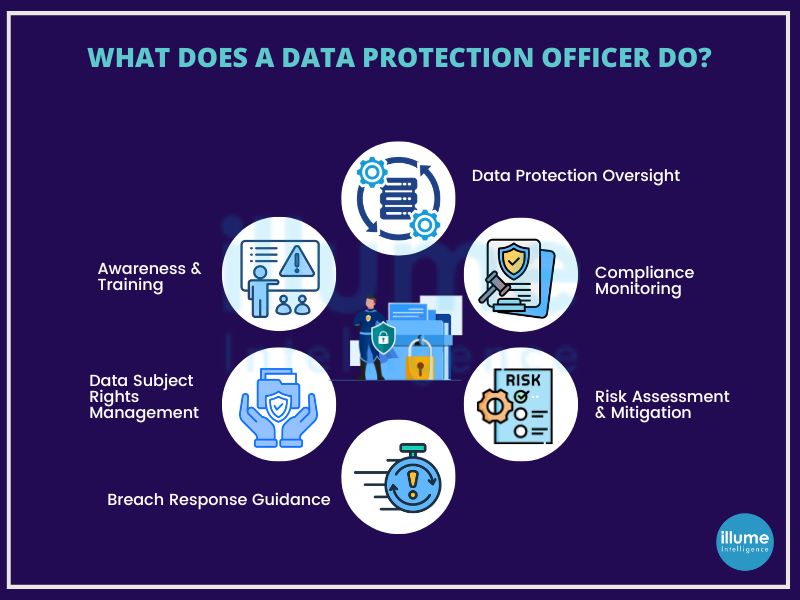
A DPO functions as an independent privacy authority inside your organization, not an extension of any single department.
Core responsibilities include:
* Monitoring and auditing data protection practices
* Advising on privacy obligations and risk exposure
* Overseeing Data Protection Impact Assessments (DPIAs)
* Acting as liaison with regulators
* Managing breach response and reporting
* Guiding how data subject rights requests are handled
* Driving organization-wide privacy awareness and training
A properly functioning DPO ensures your organization can confidently answer the questions that matter most under scrutiny: what data you collect and why, where it's stored and who can access it, whether you're compliant across every jurisdiction you operate in, and whether you're genuinely prepared for an audit or a breach.
What ILLUME Delivers Under DPO Services
* Privacy Governance Framework — Establishing governance structures, defining accountability, and aligning policies with your organization's data protection objectives.
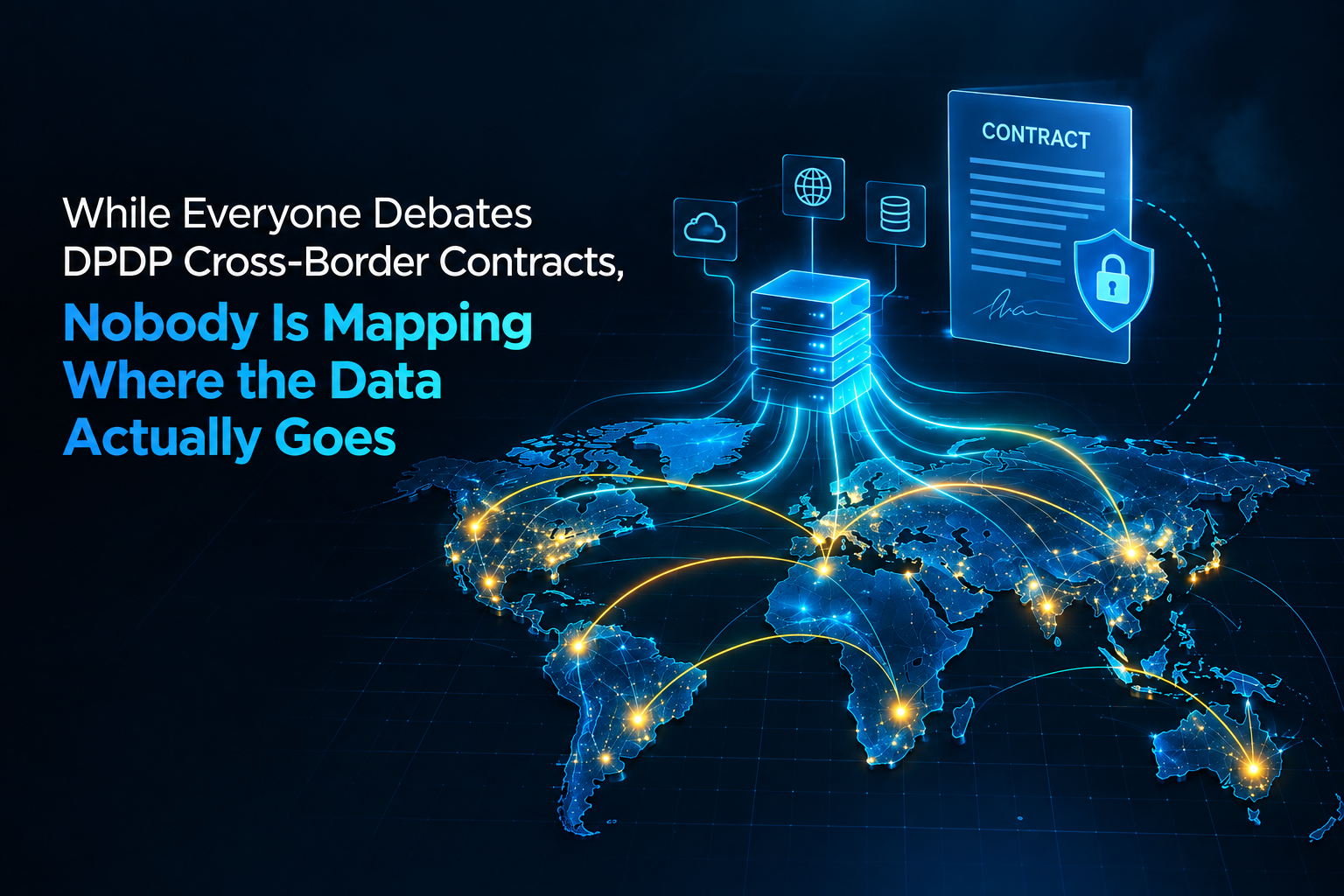
* Data Flow Visibility & Risk Mapping — Mapping the complete data lifecycle, identifying high-risk processing areas, and prioritizing privacy risk across systems.
* Compliance Monitoring & Advisory — Continuously monitoring privacy controls, providing regulatory guidance, and flagging gaps with actionable remediation steps.
* DPIA Oversight — Reviewing Data Protection Impact Assessments, validating documentation, and recommending risk mitigation for high-impact processing activities.
* Incident & Breach Advisory — Supporting breach assessment and regulatory reporting, and implementing strategies to reduce future privacy and security risk.
* Data Subject Rights Enablement — Designing workflows to manage user data requests, ensuring timely, compliant responses.
* Training & Awareness — Delivering executive and employee training programs that build organization-wide privacy accountability.
* Regulator Interface Support — Acting as liaison with regulators, supporting audits, and ensuring documentation and communication stay audit-ready.
* Third-Party & Vendor Privacy Oversight — Assessing vendor data practices and enforcing privacy requirements to reduce third-party risk across your ecosystem.
DPO-as-a-Service: A Smarter Way to Get This Done
Hiring a full-time, in-house DPO is expensive and, for most organizations, impractical relative to actual need. Illume's DPO-as-a-Service model offers a more efficient path:
* A cost-effective alternative to in-house hiring
* Access to multi-disciplinary experts, not a single generalist hire
* Scalable engagement that flexes with your business needs
* Immediate deployment, without long onboarding cycles
Why ILLUME's DPO Services Are Different
Most DPO offerings in the market are legal-led — strong on policy language, thin on technical enforcement. Illume takes a different approach.
* Cybersecurity-Driven Privacy Approach. We integrate application security, infrastructure security, threat intelligence, and risk-based compliance directly into our DPO function, so privacy is technically enforceable, not just documented on paper.
* Certified, Cross-Disciplinary Expertise. Our team is led by professionals holding ISO 27001 Lead Auditor and CISSP credentials, with deep experience in VAPT, red teaming, and compliance — meaning your DPO function is grounded in real-world security threats, not abstract legal theory.
* Independent & Conflict-Free Advisory. As an external DPO-as-a-Service provider, Illume operates with no internal bias or conflict of interest, delivering genuinely objective, risk-based recommendations.
* Business-Aligned Execution. Every recommendation is practical, implementable, and aligned with how your business actually operates — focused on reducing real risk, not generating documentation for its own sake.
The Business Impact of Strong DPO Function
Organizations with structured DPO services in place consistently see:
* Reduced regulatory risk
* Faster audit readiness
* Improved customer trust
* Stronger internal accountability
* Better alignment between legal, IT, and business teams
Most importantly, a well-run DPO function transforms privacy from a compliance burden into a genuine competitive advantage — a signal to customers, partners, and regulators that your organization treats their data with real discipline.
Get Started
If your organization processes personal data at scale, expanding into global markets, or preparing for regulatory scrutiny—now is the time to establish a DPO function.
Partner with ILLUME to build a privacy-first, audit-ready, and future-resilient organization.