TheDPDPAct.com -
Official WhatsApp Channel
Stay updated with the latest DPDP Act news, compliance insights, updates, and resources.
Join Our WhatsApp Channel →AI Adoption Is Accelerating—But Early Movers Are Taking on More Risk Than They Realize
AI is no longer experimental.
It’s already embedded in how businesses write code, analyze data, interact with customers, and make decisions. Across industries—from logistics and healthcare to SaaS and financial services—teams are using AI tools daily, often without waiting for formal approval.
The numbers tell a clear story:
* Nearly 1 in 3 employees now use AI tools frequently in their work
* Over 80% of employees admit to using unapproved AI tools (shadow AI)
* Close to 60% of organizations lack visibility into AI prompt activity
* Only a small fraction of enterprises have formal AI governance policies in place
This gap—between rapid adoption and slow governance—is where risk builds.
AI can absolutely be a productivity multiplier. But when deployed without structure, it becomes a multiplier for data exposure, compliance failures, and decision risk.
For early movers, the real challenge isn’t adopting AI faster.
It’s adopting it without losing control.
The Reality of AI Adoption Across Industries
What’s different about AI compared to previous technology waves is how quickly it spreads.
It doesn’t require heavy infrastructure. It doesn’t always go through IT. And it often starts at the edges—inside teams solving immediate problems.
* Developers are using AI copilots to write and review code
* Marketing teams are generating content and campaign ideas
* Customer support is deploying AI chat interfaces
* HR teams are screening resumes and drafting policies
* Operations and logistics teams are using AI for forecasting and reporting
This decentralized adoption is why AI feels invisible at first—and risky later.
Because by the time leadership starts asking questions, AI is already influencing:
* Business decisions
* Customer interactions
* Internal workflows
* Data movement across system
Where AI Risk Actually Begins
Most organizations assume AI risk starts with the model.
It doesn’t.
It starts with lack of ownership and visibility.
When no one clearly owns AI risk:
* Policies remain undefined
* Teams make their own decisions
* Tools get adopted without review
* Data flows go unmonitored
And because AI tools are easy to access, employees don’t wait. They optimize for speed.
That’s how sensitive data ends up in public models.
That’s how unverified outputs influence decisions.
That’s how compliance gaps quietly emerge.
AI risk doesn’t arrive dramatically. It accumulates silently.
The 5 Risk Layers Every Organization Needs to Address
Instead of treating AI as a single problem, it’s more effective to break it into five practical layers of control. This is where early adopters can bring structure without slowing innovation.
1. Ownership & Accountability
Every AI decision has a business impact. But in many organizations, there’s no clear owner.
Without defined accountability:
* Risk decisions are inconsistent
* Governance becomes advisory
* Critical use cases go unreviewed
Organizations that are getting this right are:
* Assigning executive-level ownership for AI risk
* Creating clear approval and escalation paths
* Bringing board-level visibility for high-impact use cases
Because if AI influences outcomes, someone must own those outcomes.
2. Usage Control & Shadow AI
The biggest AI risk is not malicious use—it’s uncontrolled use.
Shadow AI is now a reality in most organizations. Employees are:
* Uploading internal documents into public tools
* Using AI to automate workflows
* Integrating AI into daily tasks without approval
Blocking AI entirely isn’t realistic. It often pushes usage further underground.
Instead, organizations need to:
* Discover where AI is already being used
* Define clear acceptable use policies
* Restrict high-risk behaviors (like sensitive data sharing)
Visibility comes before control.
3. Data & Privacy Exposure
AI tools change how data moves.
What was once contained within enterprise systems is now being processed externally—sometimes without safeguards.
This creates immediate risks:
* Exposure of intellectual property
* Leakage of customer or financial data
* Violations of regulatory requirements
Early movers must:
* Define what data is allowed vs prohibited in AI tools
* Implement controls to prevent accidental exposure
* Align AI usage with privacy laws and contractual obligations
Because once data is shared with external systems, control is limited.
4. Model & Output Risk
AI doesn’t just analyze—it generates.
And those outputs can be:
* Incorrect
* Biased
* Manipulated through prompt injection
One of the most overlooked risks is over-reliance on AI outputs. When something looks confident and well-structured, it’s often trusted without verification.
Organizations need to introduce:
* Validation layers for critical outputs
* Testing against adversarial inputs
* Clear accountability for AI-assisted decisions
AI should support decisions—not replace judgment.
5. Access, Identity & Integration Risk
AI systems are increasingly connected—to internal tools, APIs, and external platforms.
This creates a new kind of attack surface.
Data shows that weak access control is a major factor in AI-related security incidents. Add to that the rise of non-human identities (APIs, bots, AI agents), and the complexity grows.
Organizations should:
* Enforce least privilege access
* Secure integrations and limit permissions
* Implement strong identity controls (SSO, MFA, conditional access)
Because AI doesn’t just observe systems—it can act within them.
The Real Problem: Speed Outpacing Governance
AI adoption is happening faster than any governance model was designed to handle.
* Tools can be deployed in hours
* Teams can adopt them independently
* Business impact is immediate
This creates a structural imbalance: Innovation moves fast. Governance moves slow.
And in that gap, risk grows.
Organizations often find themselves reacting—trying to secure systems that are already deeply embedded into workflows.
AI Governance Checklist for Early Movers
If you’re already using AI—or planning to scale it—this checklist helps you quickly assess your current posture:
1. Ownership - Is there clear executive ownership for AI risk and decision-making?
2. Acceptable Use - Have you defined how employees can and cannot use AI tools?
3. Data Exposure - Are there controls preventing sensitive data from being entered into public AI systems?
4. Shadow AI - Do you have visibility into unapproved AI tools already in use?
5. Third-Party Risk - Are AI-specific risks included in your vendor and processor assessments?
6. Model Transparency - Do you understand how the models you use are trained, what data they retain, and their limitations?
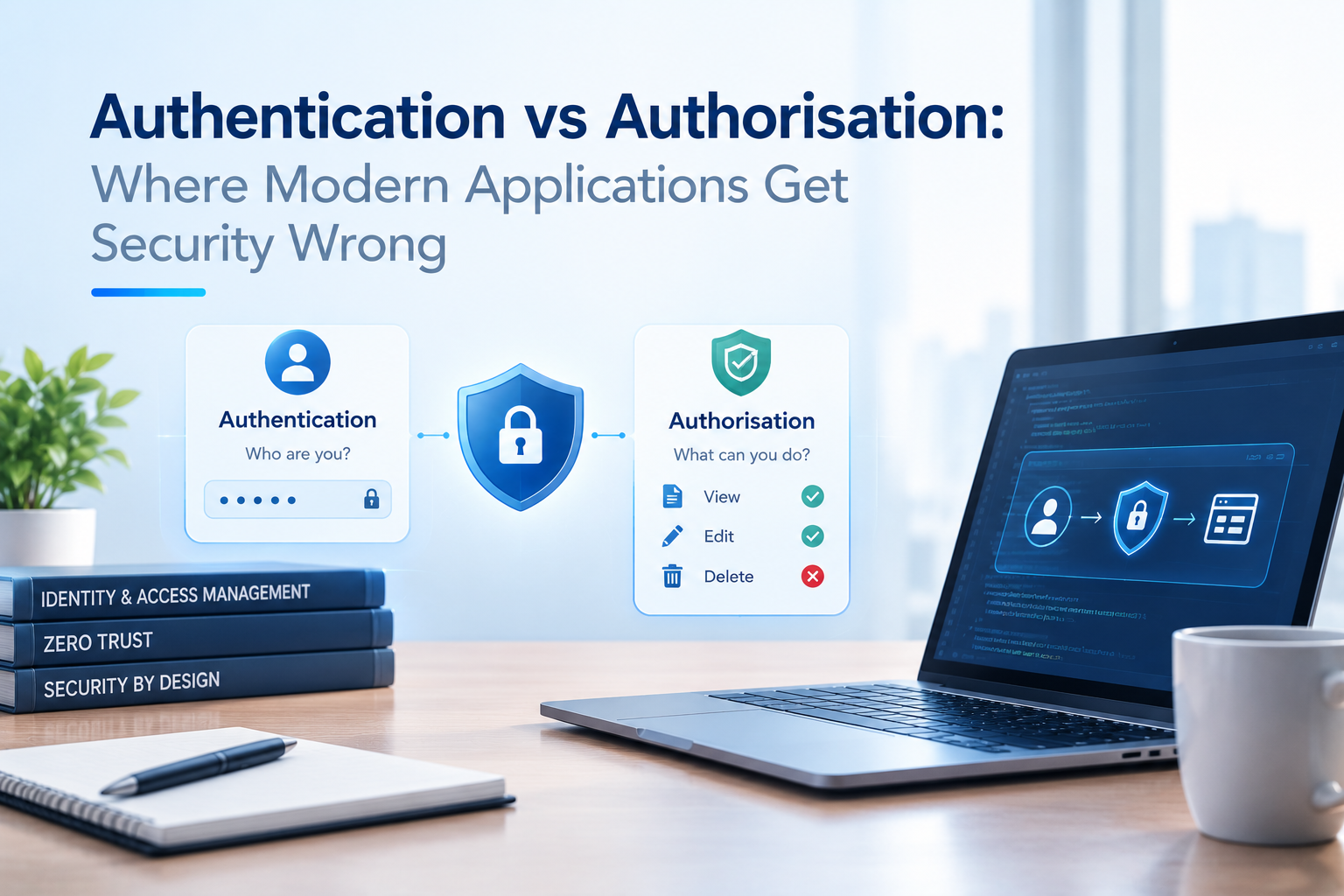
7. Access Control - Is access to AI tools restricted based on role and necessity?
8. Identity & Authentication - Are AI platforms secured with SSO, MFA, and proper identity controls—including non-human identities?
9. Data Retention - Do you know what AI systems store—and for how long?
10. Privacy & Compliance- Is AI usage aligned with regulatory obligations and client commitments?
11. Prompt Injection - Have you tested systems against manipulation through crafted inputs?
12. Output Accuracy - Are there validation mechanisms for AI-generated outputs, especially in critical workflows?
13. Bias & Ethics - Have sensitive or high-impact use cases been reviewed for bias, fairness, and ethical implications?
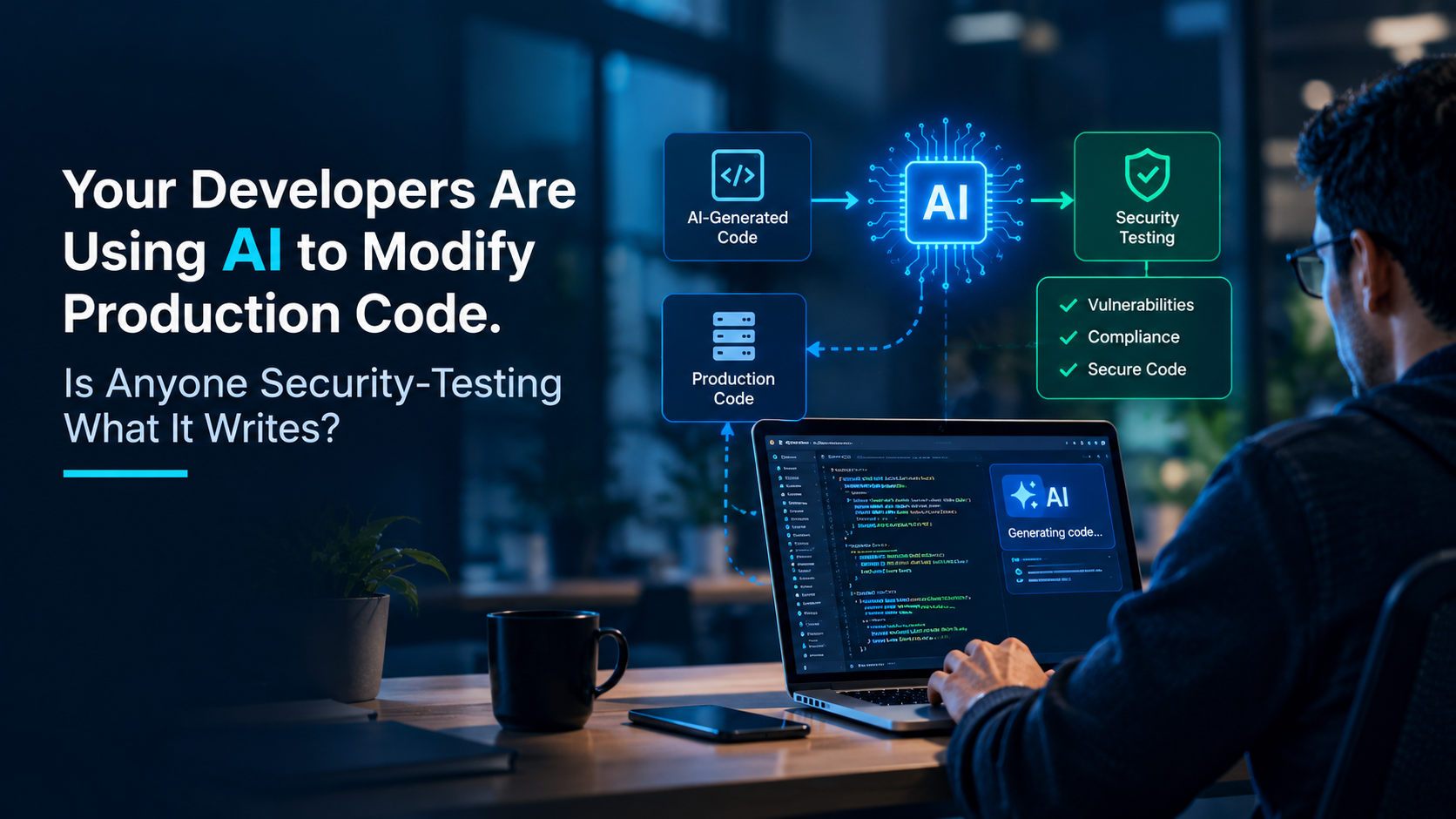
14. Secure Development - Are developers reviewing and testing AI-generated code instead of trusting it blindly?
15. Secrets & Credentials - Are there safeguards to prevent exposure of keys, credentials, or confidential data in prompts?
16. Integration Risk - Do you control what systems AI tools can access, trigger, or interact with?
17. Monitoring & Logging - Can you track AI usage, prompts, and behavior across the organization?
18. Incident Response - Are AI-related scenarios included in your incident response plans?
19. Change Management - Is AI adoption integrated into your risk and change management processes?
20. Business Value vs Risk - Is every AI use case tied to measurable value, defined risk, and clear ownership?
AI is not just another tool in your stack. It’s a force that reshapes how decisions are made, how data moves, and how businesses operate.
The companies that succeed won’t be the ones that adopt AI the fastest. They’ll be the ones that stay in control while moving fast. Because in AI, speed creates opportunity. But governance is what turns that opportunity into something sustainable.