TheDPDPAct.com -
Official WhatsApp Channel
Stay updated with the latest DPDP Act news, compliance insights, updates, and resources.
Join Our WhatsApp Channel →"Red teaming" gets used loosely enough these days to mean almost anything. Sometimes it's someone spending an afternoon typing jailbreak prompts into a chatbot and calling it a day. Sometimes it's a genuinely structured, weeks-long adversarial exercise mapped against a formal threat framework, run by people who do this for a living. Both get called the same thing far too often — and the gap between them is exactly where risk tends to hide.
A real AI red team engagement isn't a vibe check. It's systematic, adversarial testing designed to find exploitable vulnerabilities in a model, an AI agent, or the systems wrapped around them — before someone with worse intentions finds them first. It's worth understanding what that actually involves, because the difference between a real engagement and a superficial one usually only becomes obvious after something's already gone wrong.
Why This Isn't Just Penetration Testing With Extra Steps
Traditional security testing was built for software that behaves predictably — the same input produces the same output, every time, and a fix is a discrete line of code. AI doesn't play by those rules. It generates probabilistic responses that can be nudged, coaxed, or manipulated in ways most security teams were never trained to watch for, and a "vulnerability" here is often a pattern of behavior rather than a single exploitable flaw.
That distinction isn't academic. Adversa AI's 2025 security report found that 35% of real-world AI security incidents were caused by simple prompts — no exploit code, no sophisticated tooling, just carefully worded input — with some incidents leading to losses exceeding USD 100,000. A system can sail through every conventional security control it has and still be wide open to exactly this kind of attack, because nothing in a traditional test was ever looking for it.
The Frameworks a Real Engagement Is Built On
Credible AI red teaming isn't improvised, and it isn't a checklist someone made up over coffee. It's structured against a small set of frameworks that have become the industry's shared reference points.
* MITRE ATLAS is the closest thing this field has to a common language. It's the AI-specific counterpart to the well-known ATT&CK framework used across traditional cybersecurity, cataloging documented adversarial tactics and techniques against AI and ML systems — backed by real case studies, not hypothetical scenarios. It keeps growing, too: an October 2025 update alone added 14 new techniques specifically addressing AI agents and generative AI systems. Mapping engagement findings back to specific ATLAS techniques is what turns a report into something comparable across assessments and trackable over time, instead of a one-off list of things that happened to break during testing.
* The OWASP Top 10 for LLM Applications provides the coverage map — the categories of risk, from prompt injection to unbounded consumption, that any thorough engagement needs to test against, regardless of which specific system is in front of it.
* PyRIT, Microsoft's open-source Python Risk Identification Toolkit, has become one of the most widely used engines for actually running this kind of testing at scale. It's worth being precise about what it is and isn't: PyRIT doesn't have its own catalog of attack techniques. It's a framework for building and automating adversarial testing workflows — multi-turn attack strategies with names like Crescendo, TAP, and Skeleton Key, run across text, image, audio, and video, with scoring systems that grade what comes back. Loading ATLAS or ATT&CK techniques into PyRIT's orchestrators is how the taxonomy and the execution engine actually come together in practice, and it supports testing against OpenAI, Azure, Anthropic, Google, and custom endpoints alike.
What Actually Gets Tested
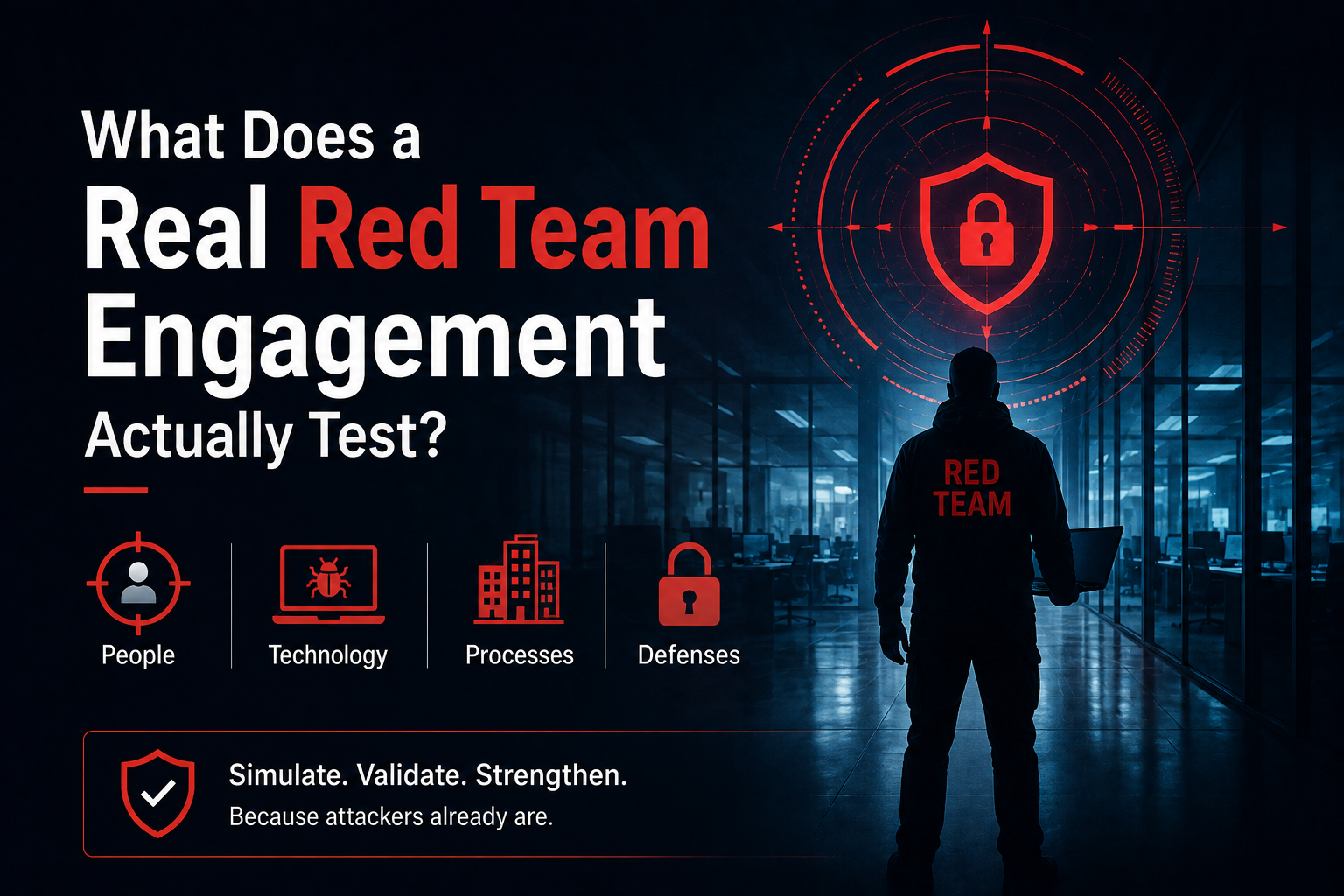
Put these frameworks together, and a genuine engagement moves through several distinct layers — not just one.
* Model-level manipulation is the most familiar category: prompt injection, jailbreaking, attempts to override or extract a system prompt. It's also, based on ATLAS's own case-study evidence, one of the most consistently exploited categories in real incidents to date.
* Data and training exposure covers whether a model can be coaxed into reproducing memorized training data, or whether systematic querying can reconstruct enough of its behavior to count as a meaningful clone — the model extraction risk this series has returned to from several angles already.
* Agentic and tool-use behavior matters more every quarter, as AI systems increasingly take actions rather than just generate text — calling APIs, executing code, retrieving documents on someone's behalf. A collaborative Agentic AI Red Teaming Guide, published by the Cloud Security Alliance alongside OWASP's AI Exchange, has emerged specifically to address this gap: testing whether an agent can be manipulated into taking an unauthorized action, not just producing unauthorized text.
* Multi-turn, conversational attacks are quietly some of the most effective techniques currently cataloged. Rather than one obviously malicious prompt, strategies like Crescendo gradually steer a conversation toward a harmful outcome across several exchanges, each of which looks individually harmless on its own.*
* Detection and response readiness closes the loop. A properly scoped engagement doesn't stop at "can this be broken." It tests whether anything actually monitoring the system would have noticed while it was happening — the same question that runs through nearly every serious AI security assessment, no matter what corner of it you're looking at.
Automation Helps. It Doesn't Replace Judgment.
Tools like PyRIT, and NVIDIA's Garak, allow testing at a scale no manual process could realistically match, and for organizations running continuous deployment cycles, that kind of automated coverage has become close to a baseline expectation rather than a nice-to-have.
But industry guidance is consistent on one point: manual expert testing still matters, and matters a lot, for finding genuinely novel vulnerabilities. Automated tools are excellent at running known technique libraries at scale, reliably and repeatably. They're considerably weaker at discovering the attack nobody's cataloged yet — which, more often than not, is exactly the kind of finding a client actually needs to hear about.
The strongest engagements lean on both: automated tooling for breadth and consistency, and experienced people for the creative, adversarial thinking that finds what the tooling was never built to look for in the first place.
Why the Distinction Matters Right Now
This isn't just a methodology debate for people who enjoy arguing about frameworks. Regulatory pressure is starting to make the difference between real and superficial red teaming a compliance question, not only a best-practice one. The EU AI Act's full compliance obligations land by August 2026, and frameworks like NIST's AI Risk Management Framework already treat adversarial testing as a core part of the "Measure" function inside any credible AI governance program.
An engagement that maps its findings to MITRE ATLAS techniques, tests across model behavior, data exposure, agentic action, and detection readiness together, and combines automated coverage with genuine human judgment is a fundamentally different exercise from a few hours spent trying obvious jailbreak prompts. Both might get called "red teaming" in a sales conversation. Only one of them tells an organization something it can actually act on.
The real test of any red team engagement, in the end, isn't whether it found something. It's whether what it found would have mattered to an actual attacker — and whether the organization now knows, with real evidence instead of a comfortable assumption, exactly where it stands.