Stress-test your AI before attackers do — uncover hidden vulnerabilities in your models, prompts, and agents before they become real-world breaches.
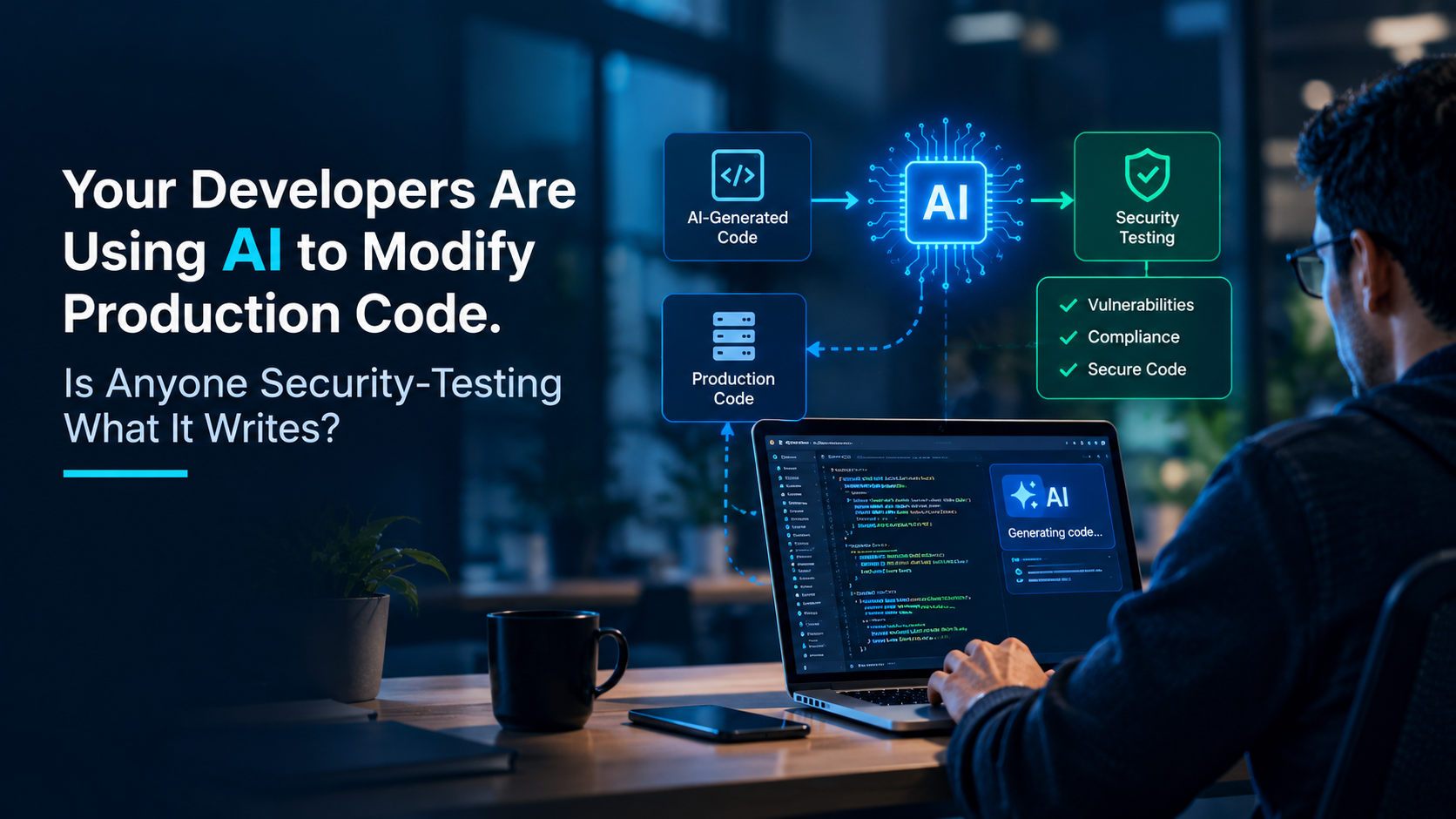
As organizations rush to deploy LLMs, chatbots, copilots, and autonomous agents, a new attack surface has opened up — one traditional security testing was never built to catch. AI Red Teaming from ILLUME Intelligence simulates real-world adversarial attacks against your AI systems to expose weaknesses before malicious actors do. From prompt injection and jailbreaks to data leakage and agentic tool abuse, our red teamers think like attackers to identify how your AI can be manipulated, misled, or weaponized. The result: a clear, actionable picture of your AI risk posture, backed by evidence, not assumptions.
What's Covered Under AI Red Teaming Service?
Our AI Red Teaming engagements are built around how AI systems actually fail in production — not generic checklists. Coverage typically includes:
* Prompt Injection & Jailbreaking — Direct and indirect injection attacks, guardrail bypass attempts, and multi-turn manipulation designed to override system instructions.
* Data Leakage & Extraction — Testing whether sensitive training data, system prompts, or proprietary logic can be extracted through crafted queries.
* Agentic & Tool-Use Abuse — For AI agents with access to APIs, databases, or external tools, we test for excessive permissions, unsafe tool chaining, and goal hijacking.
* Bias, Toxicity & Harmful Output Testing — Adversarial probing to surface unsafe, biased, or reputationally damaging outputs under edge-case conditions.
* Model Manipulation — Evaluating susceptibility to adversarial inputs, evasion techniques, and manipulation of model decision-making.
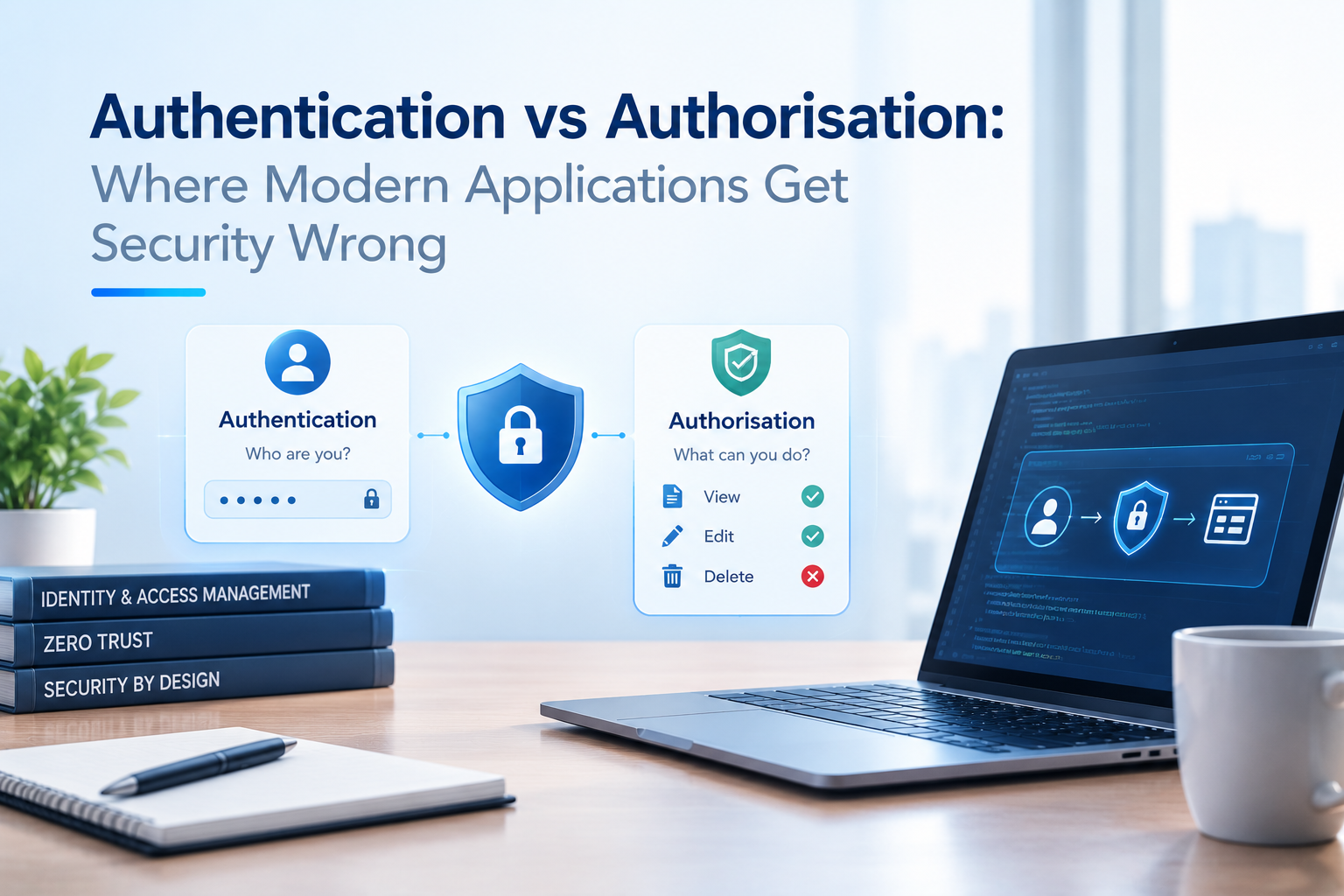
* Business Logic Abuse — Testing whether AI features can be exploited to bypass pricing logic, approval workflows, or access controls embedded in the application layer.
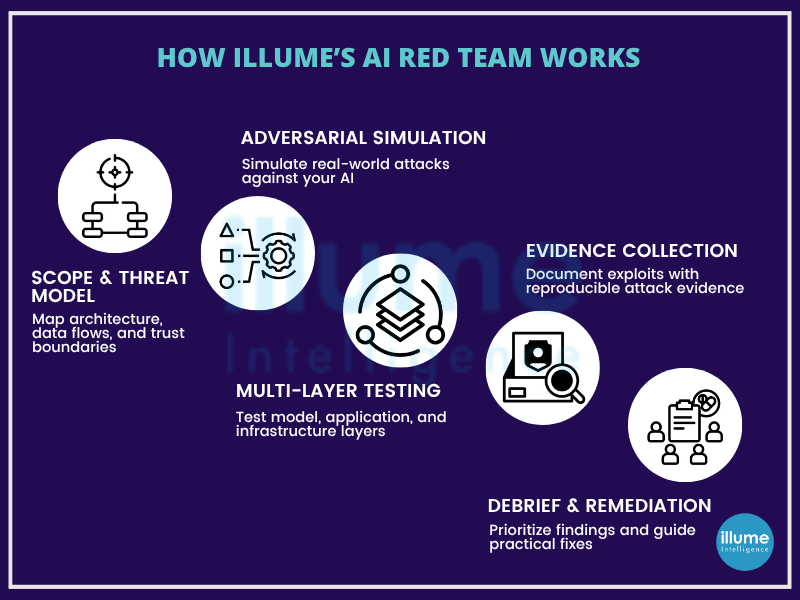
How ILLUME's AI Red Team Works?
Our approach mirrors how real adversaries operate — structured, iterative, and grounded in your specific deployment context.
1. Scoping & Threat Modeling — We map your AI system's architecture, data flows, integrations, and trust boundaries to identify realistic attack paths specific to your use case.
2. Adversarial Simulation — Our red teamers manually and systematically attempt to break the system using techniques drawn from real-world AI incidents, not just automated scanners.
3. Multi-Layer Testing — We test the model layer, the application layer wrapped around it, and the infrastructure serving it — because AI risk rarely lives in just one place.
4. Evidence Collection — Every successful exploit is documented with reproducible steps, screenshots, and business-impact context, not just a severity score.
5. Debrief & Remediation Guidance — We walk your team through findings, prioritize them by real-world exploitability, and provide fix guidance your developers can actually act on.
What's Offered Under This Service
* One-time AI Red Team assessments for pre-launch or periodic review
* Continuous/retainer-based red teaming for AI systems under active development
* Red teaming for third-party AI integrations (OpenAI, Anthropic, open-source LLMs, custom fine-tuned models)
* Agentic AI and multi-agent system testing
* Executive-level risk briefings alongside technical reports
* Retesting after remediation to validate fixes
How ILLUME's AI Red Team Service Is Different?
Most "AI security testing" in the market today is automated scanning dressed up as red teaming. Illume's approach is different in three key ways:
* Human-led, not tool-led. Automated scanners catch known patterns; our red teamers craft novel attack chains tailored to your specific model, prompts, and business context — the kind of creative, persistent probing that actually finds what matters.
* Business-context aware. We don't just test the model in isolation — we test it the way it's actually deployed, with your data, your integrations, and your users' access levels in mind.
* Built on real offensive security depth. Our AI red teamers come from traditional application security and penetration testing backgrounds, meaning we bring adversarial rigor most "AI-only" testers haven't developed yet.
What You Will Receive?
* A detailed technical report with reproducible attack scenarios and evidence
* A risk-prioritized findings summary mapped to business impact
* An executive summary suitable for board or leadership reporting
* Mapping of findings to relevant frameworks (OWASP Top 10 for LLMs, NIST AI RMF, MITRE ATLAS)
* Actionable remediation recommendations for your engineering and ML teams
* A retest report confirming closure of identified issues
Why AI Red Teaming Matters Now?
AI systems fail differently than traditional software — a single crafted prompt can bypass logic that took months to build. Regulators, enterprise customers, and boards are increasingly asking for proof of AI risk assessment before approving deployments. Waiting until after an incident is no longer a viable strategy — proactive adversarial testing is becoming table stakes for any organization deploying AI at scale.