Your chatbot shouldn't be your weakest link. ILLUME's LLM Security Testing finds out exactly how your LLM breaks — before your customers, competitors, or attackers do.
Ask your LLM the right question the wrong way, and it might hand over your system prompt, leak a customer record, or say something your legal team never wants to see in a screenshot. That's not a hypothetical — it's happened to companies far more careful than most. LLM Security Testing from ILLUME Intelligence digs into how your model actually behaves under pressure: what it reveals, what it refuses, what it gets tricked into doing. We don't just check a box for "AI safety." We stress-test the exact conversations, prompts, and edge cases that could turn your smartest product feature into your next headline.
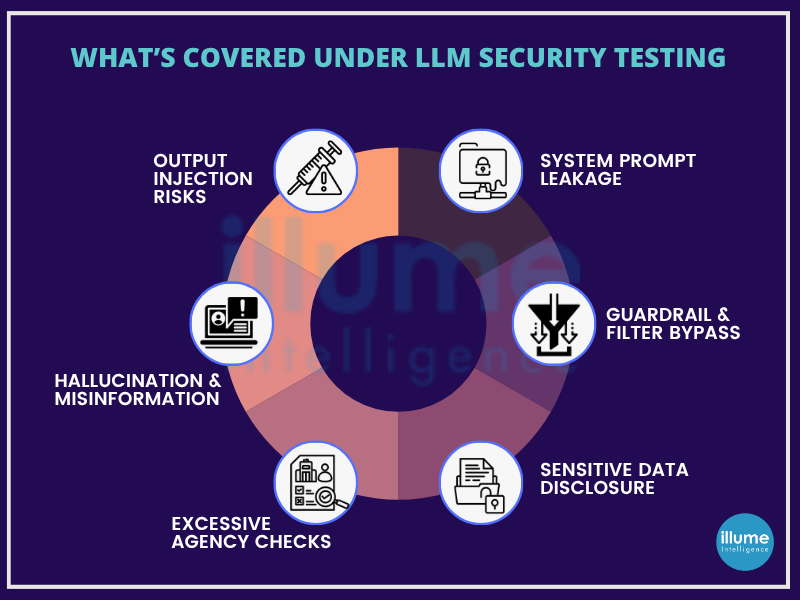
What's Covered Under LLM Security Testing
We treat your LLM like attackers would — probing for the cracks that only show up under deliberate, creative pressure.
* System Prompt Leakage — Can the model be tricked into revealing its instructions, internal logic, or configuration details?
* Guardrail & Filter Bypass — Do your content moderation and safety filters actually hold up against determined, creative prompting?
* Sensitive Data Disclosure — Can training data, cached context, or another user's conversation history be extracted through clever queries?
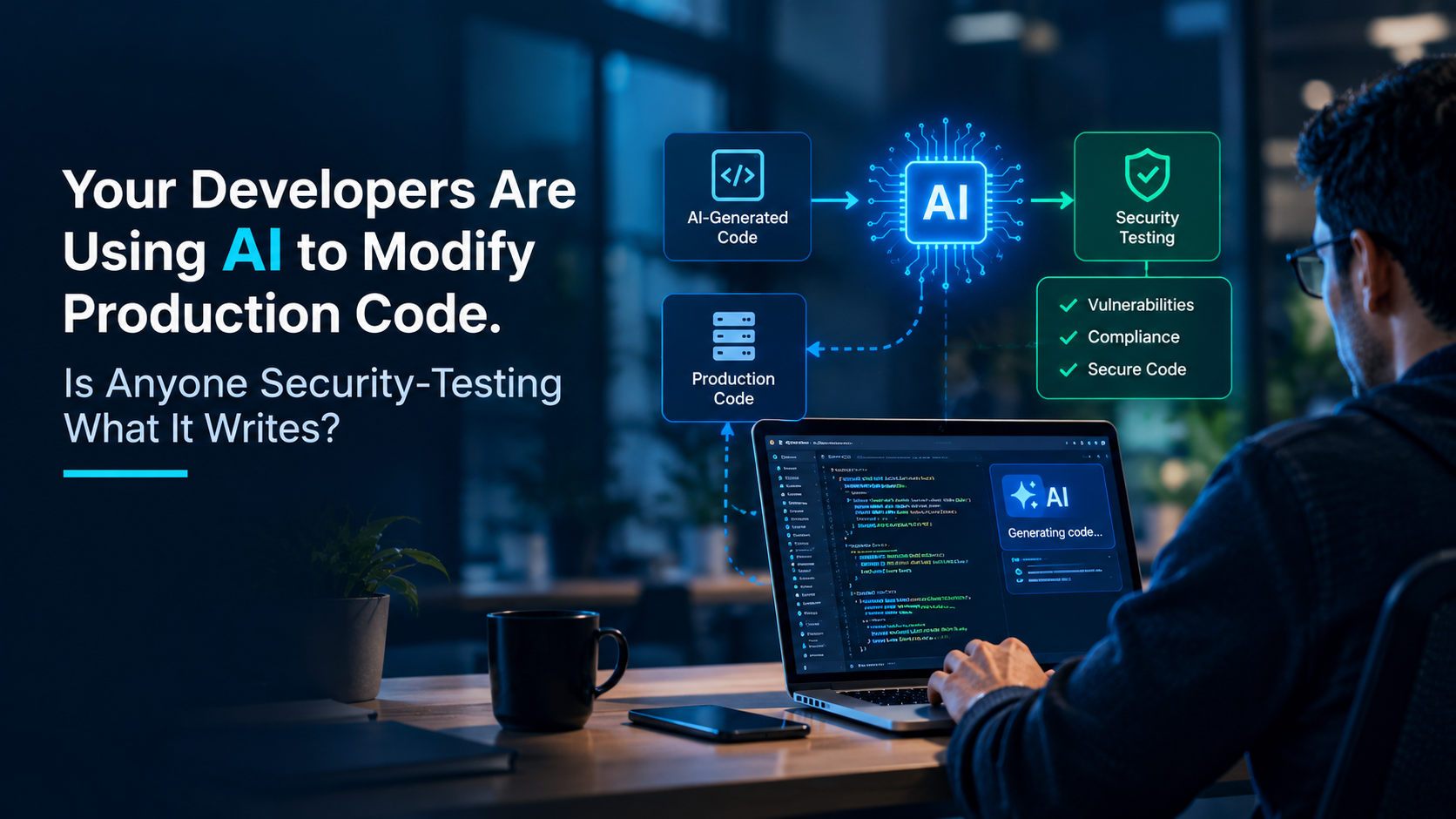
* Excessive Agency Checks — If your LLM can take actions (send emails, query databases, call APIs), can it be manipulated into doing something it shouldn't?
* Hallucination & Misinformation Risk — Where does the model confidently make things up, and what's the business or legal exposure if it does?
* Output Injection Risks — Is AI-generated output properly sanitized before it's rendered in a browser, passed to another system, or executed downstream?
How ILLUME's LLM Security Testing Process Works
Think of this less as an audit and more as an interrogation — thorough, structured, and designed to leave no soft spot untested.
1. Understand the Model's Job — We start by learning what your LLM is actually supposed to do, who talks to it, and what data it touches — because testing without context misses the risks that matter most to your business.
2. Design Adversarial Prompts — Our team builds a library of attack prompts tailored to your use case, layering known jailbreak techniques with fresh, creative manipulation attempts.
3. Run It Live — We interact with your model the way a motivated bad actor would — patient, iterative, and willing to try a hundred angles to find the one that works.
4. Document Every Break — Each successful bypass is captured with the exact prompt sequence, so your team can reproduce and fix it — not just take our word for it.
5. Prioritize by Real Damage — We rank findings by what they'd actually cost you — a leaked secret is not the same risk as an awkward but harmless response.
Where LLM Security Testing Fits In Your AI Stack
LLM Security Testing zeroes in on the model's behavior itself — its conversations, its boundaries, its blind spots. It complements broader assessments like AI VAPT (which covers your APIs and infrastructure) and AI Red Teaming (which simulates full adversarial campaigns across your AI system). Many clients start here, since it's often the fastest way to see how exposed a live LLM feature really is.
What Makes ILLUME's LLM Security Testing Different From a Generic "AI Audit"
* We test conversations, not checklists. Generic AI audits run a fixed list of known prompts. We build attack sequences specific to your model's actual purpose and your industry's threat landscape.
* We think like your users — and your worst-case users. Real risk often hides in edge cases: the frustrated customer, the curious competitor, the bored intern with too much time. We test for all of them.
* We speak developer, not just security. Findings come with exact reproduction steps your engineering team can act on immediately, not vague risk narratives that go straight to a backlog nobody touches.
What's In Your LLM Security Testing Report
* A full log of successful and attempted attack prompts, with outcomes
* Clear severity ratings tied to actual business consequences
* Specific guardrail and prompt-engineering recommendations
* An executive brief your leadership can actually read in five minutes
* A path to retesting once fixes are in place, so you know the gaps are closed
The Cost of Skipping LLM Security Testing
An LLM that leaks the wrong data, says the wrong thing, or gets talked into an action it shouldn't take isn't just a bug — it's a trust problem, a PR problem, and increasingly, a compliance problem. As AI features become customer-facing at scale, the companies that test rigorously before launch are the ones that don't end up explaining themselves after.