TheDPDPAct.com -
Official WhatsApp Channel
Stay updated with the latest DPDP Act news, compliance insights, updates, and resources.
Join Our WhatsApp Channel →For most of the last two decades, "perimeter security" meant something concrete. There was a network, and there was everything outside it, and a firewall sat in between deciding who got through. An entire security discipline got built around defending that line.
That line doesn't really exist anymore — not for most modern products, and certainly not for anything built on AI.
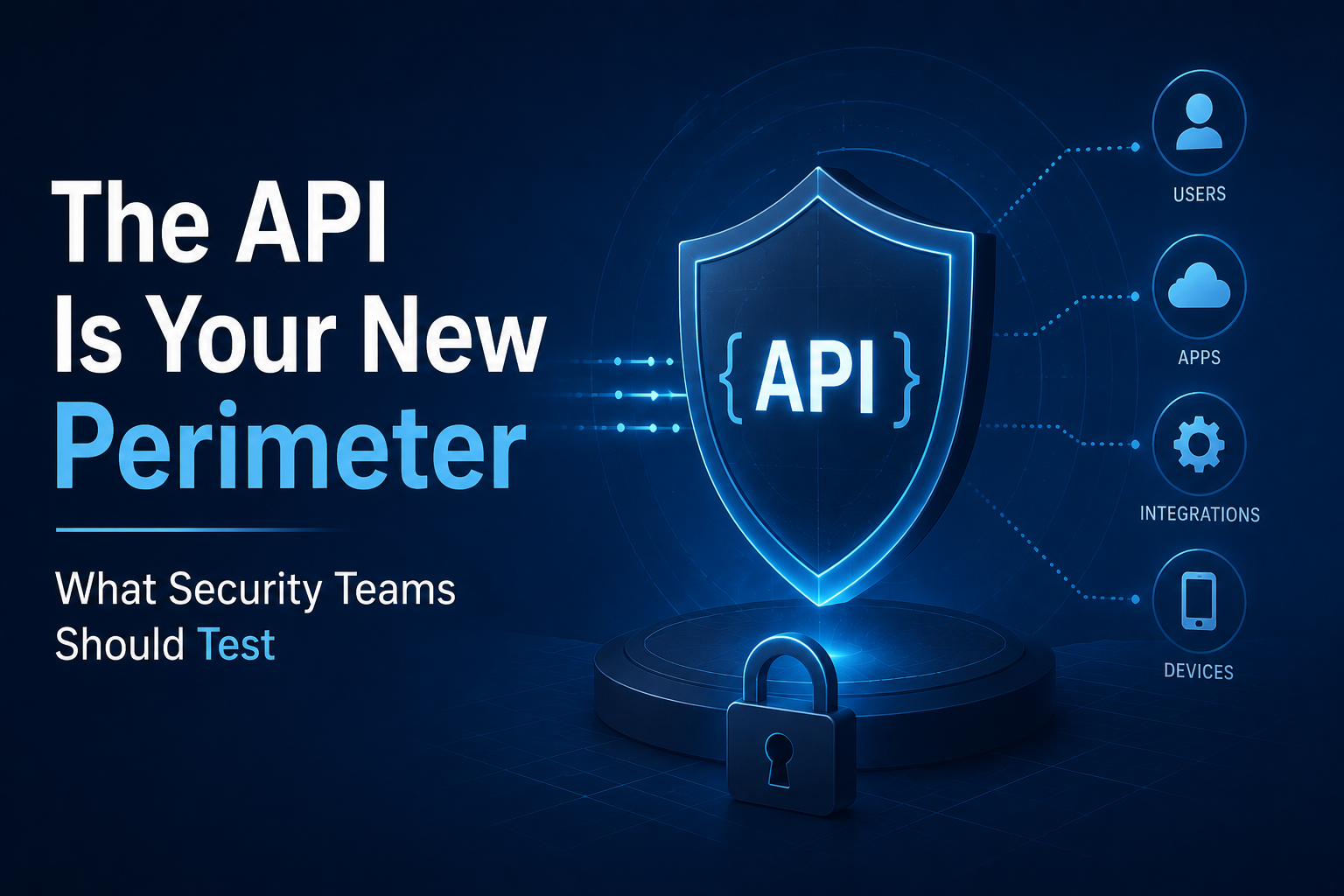
What sits between an organization's most valuable systems and the outside world today is an API: a set of endpoints that customers, partners, and increasingly other AI agents talk to directly, all day, every day. There's no wall to speak of anymore. Just a door that's supposed to open for the right people and stay shut for everyone else — a judgment call happening thousands of times a second.
The industry data on how often that judgment call gets it wrong is hard to look away from.
What the Numbers Actually Show
Recent enterprise research has been fairly consistent on this point: more than half of organizations have dealt with an API-related data breach in the past couple of years, and nearly every enterprise surveyed ran into some kind of API security issue in just the past twelve months. That's not a niche problem anymore. It's close to universal.
The detail that matters most, though, isn't the breach rate — it's how these attacks actually happen. Roughly 95% of API attacks come from sessions that were already authenticated, meaning the attacker didn't break in. They walked in, using credentials or access that was legitimately theirs to begin with, and then did something with that access nobody anticipated.
That single fact explains almost everything else in this piece. Model extraction, prompt injection, quiet data leakage through an AI endpoint — all of it fits the same pattern. Nobody's picking a lock. They're asking a system questions it was never built to be asked, using access it was never supposed to be a problem to have.
Despite how common this has become, structured testing hasn't kept pace. By most industry estimates, fewer than one in ten organizations run anything resembling a dedicated API security testing program. Nearly everyone has the exposure. Almost nobody is checking for it on purpose.
Why AI Makes This Worse, Not Just Different
Here's the part worth sitting with: for AI systems specifically, the API isn't a part of the attack surface. It's close to being the whole thing.
One widely cited 2025 analysis found that nearly 99% of AI-related vulnerabilities identified were, at their root, API vulnerabilities — not model architecture flaws, not training-data leaks in the abstract, but API-layer problems wearing an AI costume.
Developer sentiment reflects the same unease even where formal testing programs haven't caught up. Surveys consistently surface the same worries: unauthorized calls coming from AI agents nobody fully trusts yet, sensitive data reachable through endpoints scoped for a narrower use case than what's actually running in production now. Confidence in handling any of this well remains low across the industry — a sign that AI-specific monitoring has, in most organizations, simply not caught up to how fast AI deployment has moved.
The Two Frameworks Worth Testing Against
Properly testing an AI-serving API comes down to two frameworks doing most of the heavy lifting. Neither is optional.
The OWASP API Security Top 10 is still the right starting point for general API risk — broken object-level authorization, broken authentication, security misconfiguration. Unglamorous problems, but they account for the large majority of real-world attacks the industry sees every year, and they don't disappear just because there's a model sitting behind the endpoint.
The OWASP Top 10 for LLM Applications — now in its 2026 edition after a substantial 2025 rework — covers what's genuinely different about AI risk. It's built from real incident data rather than theory, and it maps cleanly onto frameworks like NIST's AI Risk Management Framework and MITRE ATLAS, which makes it a useful shared language between security and engineering teams who don't always speak the same one.
Two entries from that list matter more than the rest here.
Prompt injection has held the top spot in every edition since the list first existed. The reason is almost structural: a language model processes instructions and the content it's working on through the exact same channel. An attacker can write input the model interprets as a new instruction rather than as something to simply read and respond to — and the model, by design, often can't tell the difference.
Unbounded consumption is the newer, broader category that replaced what used to be called "Model Denial of Service." It now explicitly covers resource abuse in general — traditional denial-of-service, "denial of wallet" attacks that quietly inflate an API bill, and, notably, model extraction attacks that clone a model's behavior through nothing more than patient, systematic querying.
One real example is worth sitting with. OWASP's own documentation cites a November 2023 incident where repeated-token prompts pushed a production language model into emitting more than 10,000 unique memorized training examples — for roughly USD 200 in API spend. That's the entire argument for taking this seriously, in one sentence: a rounding error of API usage pulled out training data at a scale most conventional breaches would need far more effort to match.
What a Serious Test Actually Covers
Testing an AI-serving API properly means going well past a generic penetration test with "AI" added to the report title. A thorough assessment tends to look at the same handful of areas, examined the way an actual attacker would approach them rather than the way a checklist would.
Authorization boundaries come first — whether permissions are scoped tightly per endpoint, or whether one set of credentials quietly grants more than it should, and whether object-level authorization can be bypassed to reach another user's or tenant's data.
What the API actually returns matters just as much — confidence scores, logits, full probability distributions — and whether any of that detail exceeds what the product genuinely needs. Often it does, and often nobody made that decision on purpose; it was simply the framework's default setting, left untouched.
Rate limiting and consumption controls need to be tested against something more realistic than a burst-traffic scenario: patient, low-and-slow querying, spread across multiple accounts or keys, the way an actual extraction attempt would look in practice.
For anything LLM-backed, prompt-layer resilience deserves its own scrutiny — whether the system prompt can be pulled out or overridden through ordinary-looking user input, and whether the application actually distinguishes between an instruction it should trust and content it merely retrieved from somewhere else.
Then there's the piece most programs skip entirely: whether monitoring would notice at all. Not whether a control exists on paper, but whether a systematic probing campaign run against the live system would generate an alert — or simply blend into the noise as one more authenticated session doing its job.
Finally, it's worth accounting for the endpoints nobody remembers building. Shadow and abandoned APIs make up a meaningful share of most organizations' real footprint, and an AI system is only as protected as the least-watched door that can still reach it.
The Honest Bottom Line
The gap between how exposed this layer actually is and how rarely it gets properly tested is, frankly, the whole story here. Nearly every organization has API problems. Very few have a structured program built to find them before they turn into something worse.
For an AI system, that gap costs more than it would for an ordinary web API, because what's actually at risk isn't just data sitting behind an endpoint — it's the model's learned behavior, the thing the entire product was built around, sitting behind an attack surface where legitimate-looking, authenticated traffic is already the attacker's favorite disguise.
At ILLUME, this is the shape our AI API assessments take — authorization, output design, consumption limits, prompt resilience, and detection readiness, tested together as one connected system rather than as a checklist ticked off in isolation.
The perimeter didn't disappear. It just moved somewhere most security programs haven't followed it yet. The only real question left is whether anyone has actually gone and checked where it's standing now — or whether that's still just an assumption sitting quietly on an architecture diagram nobody's opened in a while.