TheDPDPAct.com -
Official WhatsApp Channel
Stay updated with the latest DPDP Act news, compliance insights, updates, and resources.
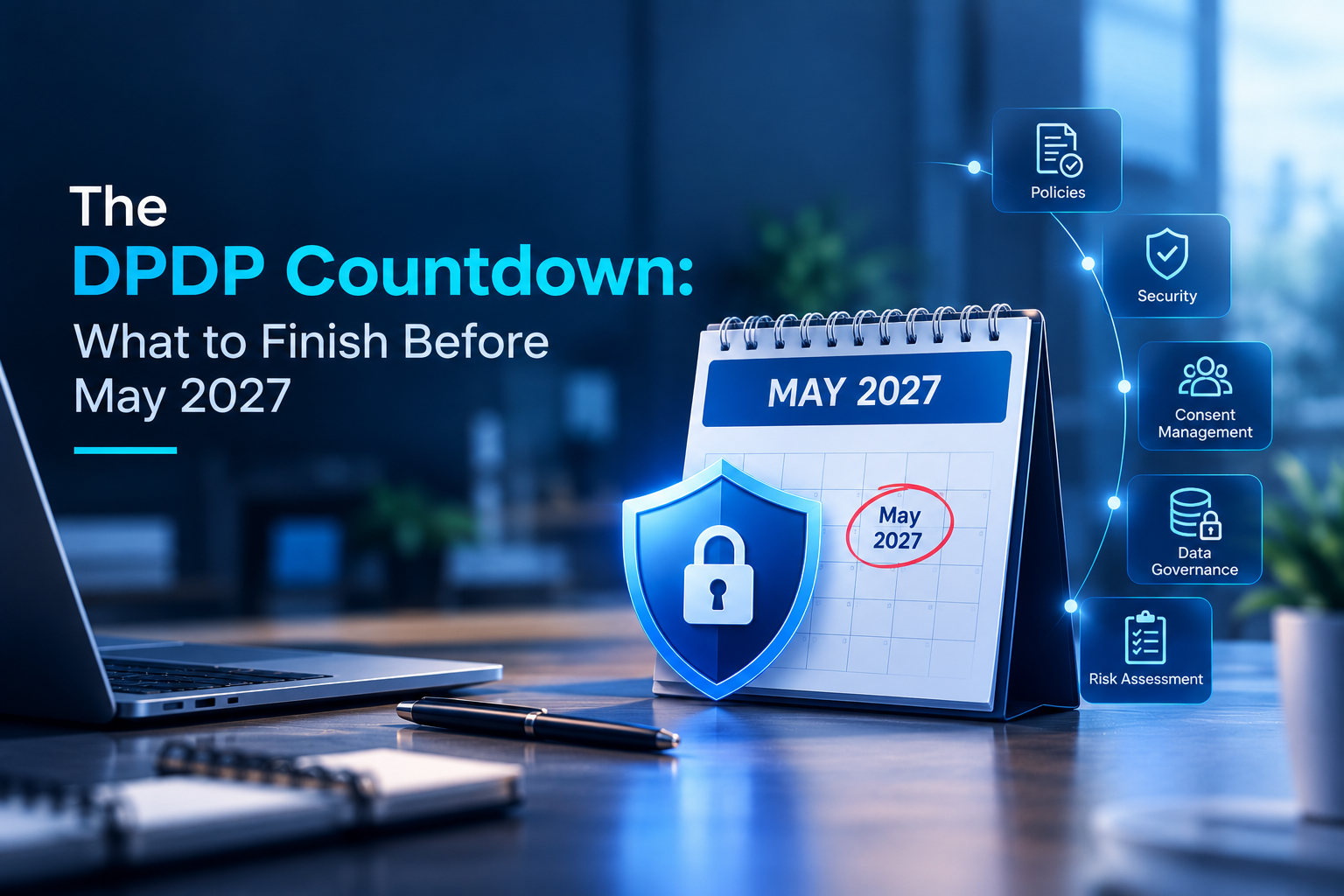
Join Our WhatsApp Channel →India's Digital Personal Data Protection Act is moving from statute to enforceable obligation. Under the commencement schedule notified in November 2025, its core duties are due to apply from mid-May 2027, with the first checkpoint, the Consent Manager provisions, falling around mid-November 2026. For any organization that collects personal data, this defines a fixed window in which to complete a substantial programme of work: data mapping, redesign of notices and consent, security controls, vendor contracts, and breach-response readiness. This guide sets out the key dates, the work required in each phase, and how to plan for a timeline that may yet change.
The Dates That Matter
The Rules were notified on 13 November 2025, and the commencement is staged in three groups:
* Already in force (from November 2025): the provisions that establish the Data Protection Board, plus Rules 1, 2, and 17 to 21.
* About 13 November 2026: the Consent Manager provisions, including Rule 4, which covers how consent managers register.
* About 13 May 2027: the main body of duties, including notice and consent, security safeguards, breach notification, children's data, the Significant Data Fiduciary regime, and penalties.
Two cautions belong beside these dates. First, the November 2026 and May 2027 dates are calculated from the notification, not stated outright in an official instrument. Some sources count from the Gazette publication on 14 November and arrive at 14 May 2027 instead. Plan to the earlier date.
Second, in January 2026 MeitY was reported to be considering shortening the 18-month window to 12 months, which would pull the main duties forward to November 2026. As of the sources I checked in mid-October 2026, no notification had changed the commencement periods and the proposal had neither been adopted nor withdrawn. Treat it as a risk, confirm the position in the Gazette before you finalize your plan, and favor an earlier internal target.
Phase One, Now to December: Know Your Data
Everything else depends on this phase, and it is the one most teams underestimate.
1. Map where personal data lives. List every system, vendor, spreadsheet, and SaaS tool that holds personal data, what is collected, and why.
2. Classify your role. Are you a data fiduciary, a processor, or both for different activities? Obligations differ.
3. Judge your Significant Data Fiduciary exposure. SDFs must appoint an India-based Data Protection Officer, commission independent audits, and run impact assessments. Designation is by the government, so assess whether your data volume or sensitivity makes you a likely candidate.
4. Run a gap analysis. Compare current practice against each duty, and rank the gaps by risk.
5. Watch the consent manager window. If you plan to operate as, or integrate with, a consent manager, the registration provisions are the first to arrive.
Phase Two, January to February: Rebuild What Customers See
This is the user-facing layer, and it is where most visible change happens.
* Notices and consent. The Rules call for a clear, standalone notice explaining the specific purpose of processing. Old privacy-policy language rarely meets that standard.
* Withdrawal. Withdrawing consent must be about as easy as giving it.
* Grievance channel. Publish a named contact who can respond to data-related queries.
* Retention and deletion. Write a retention schedule and build the deletion jobs that enforce it. Policies that no system executes are paperwork.
* Children's data. For anyone under 18, the Rules require verifiable parental consent. If minors can use your service, add age gating.
Phase Three, March to May: Harden and Rehearse
* Security safeguards. One vendor summary of the final Rules lists encryption, masking or tokenisation, and strong access control, with logs retained for at least a year. Verify these specifics against the official Gazette text, since I could not confirm them from the Rules directly.
* Processor contracts. Amend vendor agreements so processors carry matching obligations.
* Breach runbook. Rule 7 requires telling affected individuals without delay and giving the Board an immediate description followed by a detailed report within 72 hours. CERT-In's separate six-hour clock already applies today. Draft the notices in advance and rehearse them.
* Training and a dated record. Train staff, and file a dated compliance record before the deadline. Evidence of preparation matters if you are ever questioned.
What About the Regulator, and the Old Rules?
The Data Protection Board exists in law, but as of the latest reporting its found, its chairperson and members had not been appointed. Its powers and the penalty provisions take effect with the main tranche. Penalties run up to INR 250 crore for failing to maintain reasonable security safeguards. A slow-starting regulator is not a reason to slow down, because duties and penalties arrive on schedule.
The same tranche includes the provision that amends the IT Act, and commentators note that the SPDI Rules, which currently set India's "reasonable security practices" standard, will fall away once the DPDP regime is fully in effect. If your security documentation is written against SPDI, it needs a refresh against the new Rules.
A Note for Kerala's Startups and Growing Firms
Kerala's startup ecosystem is substantial and growing. A February 2025 report quoted the state as having established about 6,200 startups over eight years, attracting roughly INR 5,800 crore in investment and creating around 62,000 jobs, with a target of 15,000 startups by 2026. Support is concentrated around Technopark, Infopark, and Cyberpark. Those figures are over a year old and the target is aspirational, so read them as scale, not a current count.
Young product companies often collect a lot of personal data early, through sign-ups, analytics, and third-party tools, while having the least spare capacity for compliance work. Starting the data map now, before the product's data flows harden, is far cheaper than retrofitting them later.
Where ILLUME Intelligence Can Help
ILLUME Intelligence supports this journey through the DPDP compliance services, covering gap assessment, data mapping, policy and consent design, and audit readiness. For organizations that need a named privacy lead without a full-time hire, our DPO Services offer that on an ongoing basis. A short readiness assessment is usually the right first step, since it turns this checklist into a prioritized plan for your specific systems.
The Bottom Line
The honest summary is that the date is a range, not a point. May 2027 is the planning anchor, November 2026 is the first real checkpoint, and a possible shortening is a risk you cannot rule out. Work backward from the earliest date, finish the data map first, and leave the last quarter for hardening and rehearsal. Organizations that treat the next few weeks as the start of the project, not the middle of it, will reach the deadline with evidence instead of intentions.