TheDPDPAct.com -
Official WhatsApp Channel
Stay updated with the latest DPDP Act news, compliance insights, updates, and resources.
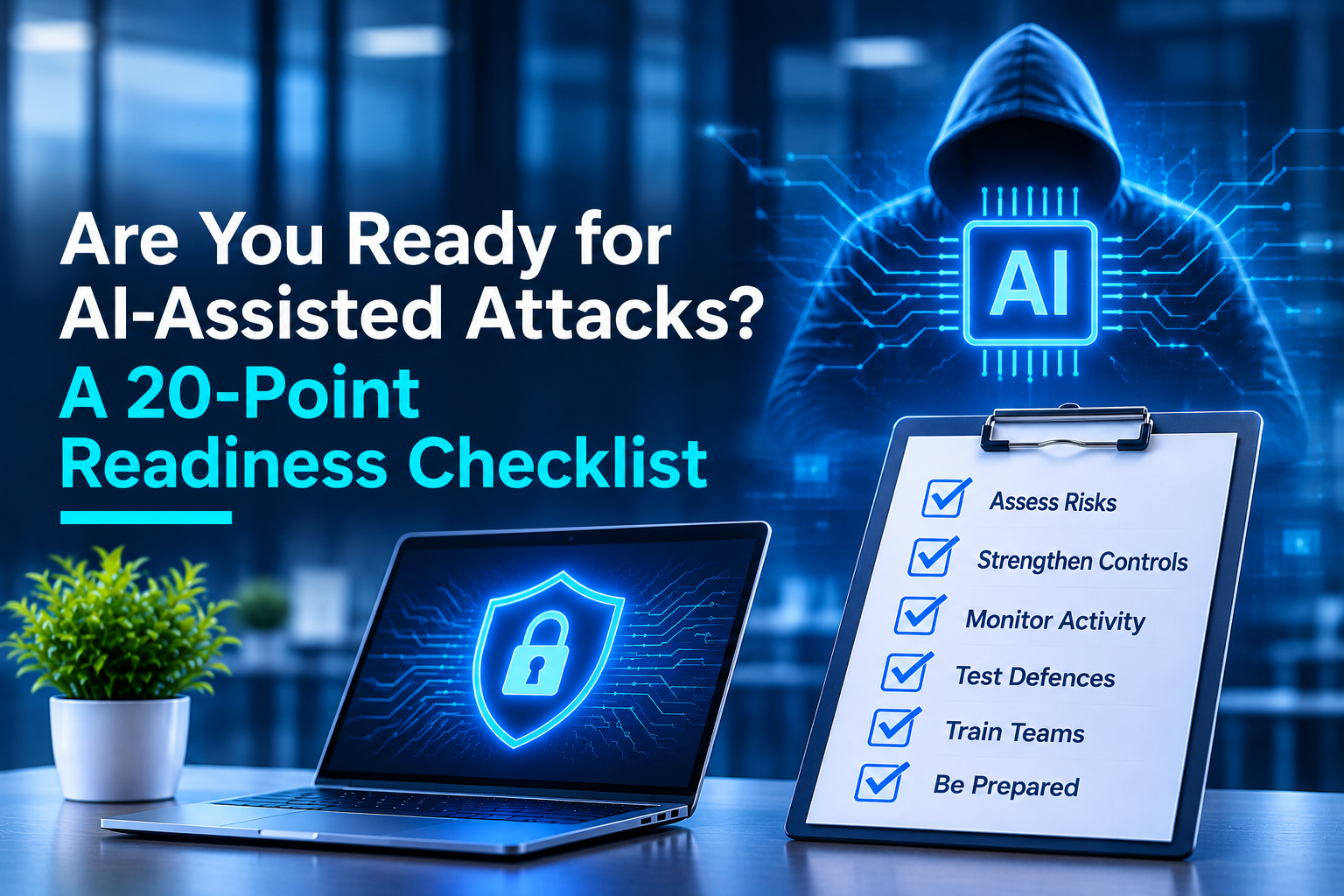
Join Our WhatsApp Channel →Most security checklists quietly assume an attacker who works office hours and gets tired. Google's Threat Intelligence Group describes something different. In its May 2026 report, a state-linked group tracked as APT45 sent "thousands of repetitive prompts" that work through vulnerabilities one after another and test whether the exploits actually run. Nothing about that gets bored, distracted or goes home.
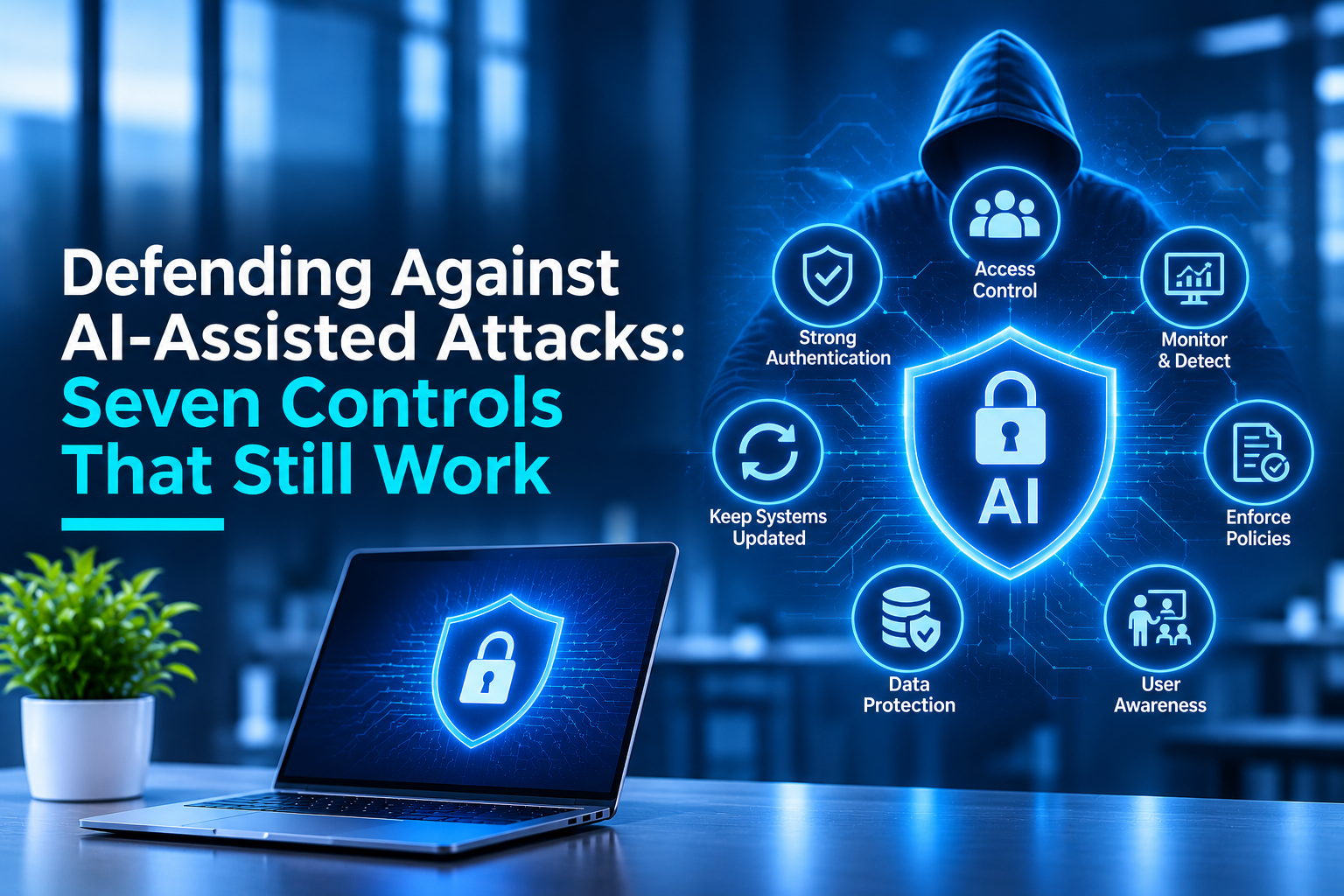
You cannot match that with effort, so readiness comes down to a short list of questions with honest answers. Here are twenty. This is the companion to our guide on defending against AI-assisted attacks, and its seven sections follow the same seven controls.
How to use it: tick a box only if you could show someone the evidence today. "I think so" is an unticked box. A * means fix it first.
Items marked CERT-In reflect advice CERT-In has given financial firms, as reported by Moneylife and CXO Digital Pulse (we could not open the advisory itself). The rest is our own recommendation.
1. Exposure: what can they reach?
A. * We have a current list of every internet-facing system, app and API, each with a named owner. Automated tools probe everything, and a forgotten test server is as reachable as your main site.
B. * Actively exploited flaws on exposed systems are fixed within days, with a deadline we track. Where a patch cannot go in yet, a firewall rule or isolation covers the gap.
C. Old, unused and test systems are switched off, and test environments share no credentials or routes with production. CERT-In advises this separation. Anything you do not use is risk with no benefit.
2. Identity: what can they steal and reuse?
A. * Admin and remote-access accounts use phishing-resistant MFA, such as security keys or passkeys. Codes sent by text or typed into a page can be tricked out of people.
B. Powerful access is time-limited. Admin rights are granted for a task and expire afterwards, so a stolen account is not a permanent master key.
C. No keys, passwords or tokens sit in code, config files or chat messages, and we scan for them. CERT-In advises automated secret scanning, short-lived tokens and regular rotation. Rotate anything that leaks.
3. Limits: what stops a fast attacker?
A. * Logins, password resets and one-time-code requests are rate-limited, with lockouts and burst alerts. A script can try thousands of guesses an hour, and a person cannot.
B. * Anything that moves money or data in bulk has per-action and per-day caps. That covers payments, exports, downloads and API pulls. A cap turns a disaster into an incident.
C. Our servers check every request, and treat apps and browsers as untrusted. CERT-In advises server-side validation of transactions and business rules, because anything on a user's device can be altered.
4. Approvals: who has to say yes?
A. * High-impact actions need a second approver: payments, changes to payee or bank details, privilege changes and bulk deletions. One approval step is the easiest thing to automate around.
B. Approval happens outside the channel the request came from. A call-back to a known number beats replying to the email or message that asked.
5. Containment: how far can they get?
A. Networks are segmented, so one compromised laptop cannot reach servers, databases and backups.
B. * Backups are offline or immutable, ordinary and admin accounts cannot delete them, and we have tested a restore. A backup you have never restored is a hope.
C. Each application and service has only the permissions it needs, reviewed regularly. What an attacker inherits is what they can do.
6. Detection: who notices, and when?
A. * Someone or something watches around the clock, including nights, weekends and holidays, with lower alert thresholds then. CERT-In advises this because autonomous tools can do high-volume work before teams step in.
B. We have alerts for bursts, many near-identical requests, tiny test actions followed by large ones, and odd-hour logins. These are the habits of automated attackers.
C. We run decoys: canary credentials and fake admin panels. CERT-In lists these. Nobody legitimate touches them, so any touch is a high-quality alert.
7. Response: how fast can you act?
A. * We can switch off the riskiest things within minutes: disable an account, revoke a token, pause payouts, isolate a server. The actions are pre-approved, and named people can trigger them.
B. Our incident playbook covers reporting to CERT-In, which expects serious incidents within six hours, and lists who files it and who to call at your bank and the police.
C. We have rehearsed against a fast, automated attacker, and after any incident we check for leftover access. The I4C cybercrime centre has advised, as reported by The Federal, authorised red-team exercises that simulate machine-speed attacks, and CERT-In notes some firms were hit again after fixing the first problem.
Your score
Count your ticks out of 20, and then count the * items separately. There are nine.
- All nine * items ticked, and 15 or more overall: you are in good shape. An independent security test is the next step, to confirm the ticks.
- Any * item missing: fix those first, whatever your total. They are the gaps a fast attacker uses.
- Fewer than 10 ticks: that is a plan, not a failure. Pick three * items, assign owners, and set dates this month.
Re-score every quarter, and again after any major change: a new system, a new vendor, a new AI tool. Readiness is a habit, and the list above is only as good as the last time someone checked it.
How ILLUME Intelligence can help
ILLUME Intelligence's Penetration Testing and Red Team Testing services check your ticks against a real attacker, including a fast, automated one. Our SOC provides round-the-clock monitoring, our Incident Response service helps you build and rehearse the playbook, and our vCISO service can own the improvement plan. A review of your nine * items is a practical first step.
Comments
No Comments Found.
Search Here

Are You Ready for AI-Assisted Attacks? A 20-Point Readiness Checklist
November 25, 2026
Defending Against AI-Assisted Attacks: Seven Controls That Still Work
November 22, 2026
The NBFC Disbursement Security Checklist: Can Your Payouts Be Stopped?
November 19, 2026